
Last updated November 14, 2026
 Wrought iron
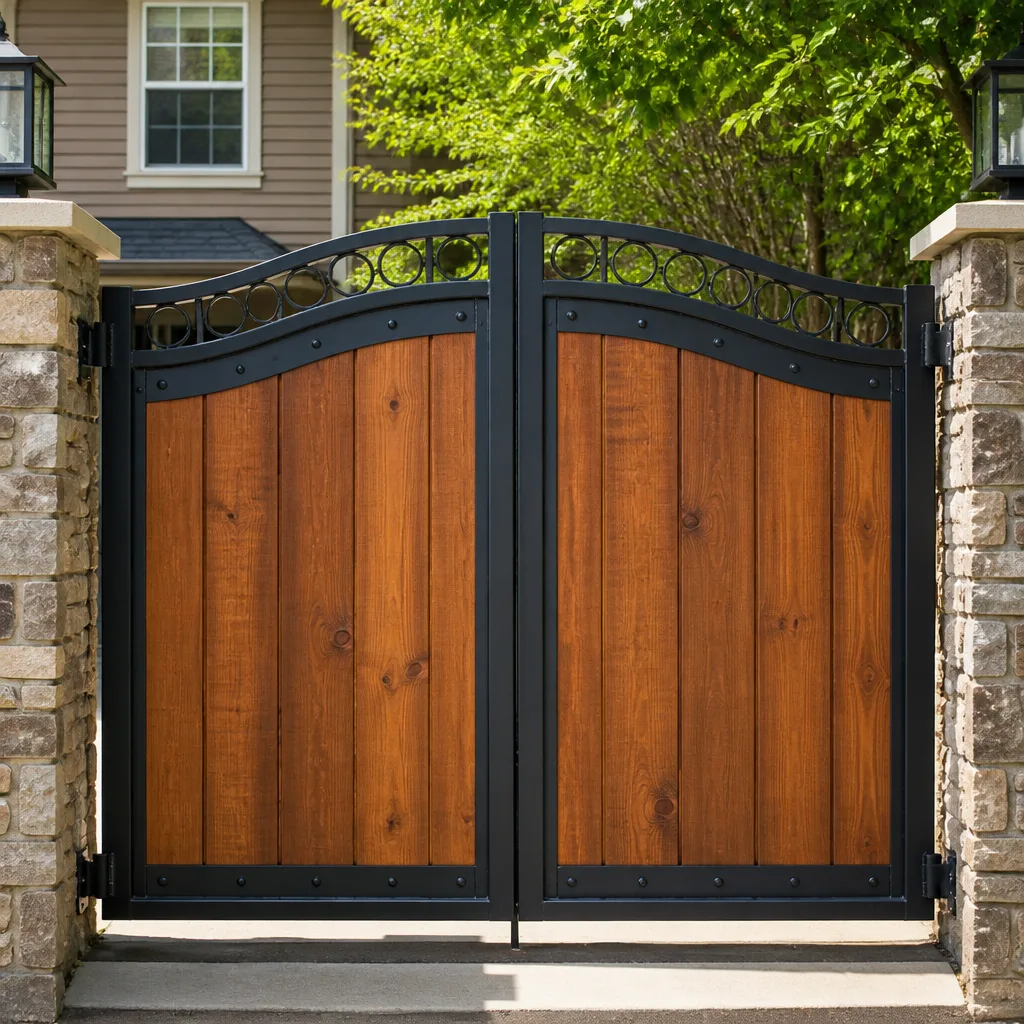 Wood & steel frame
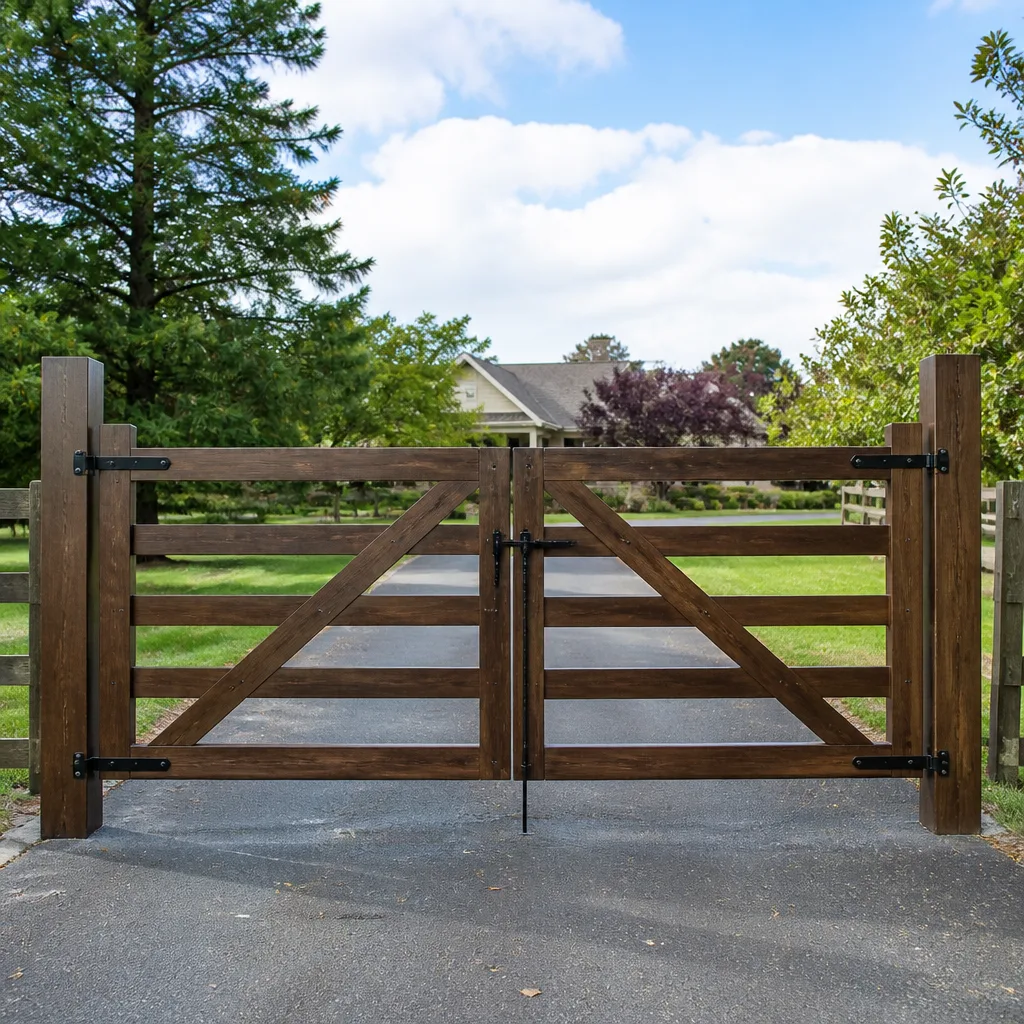 Farm & ranch
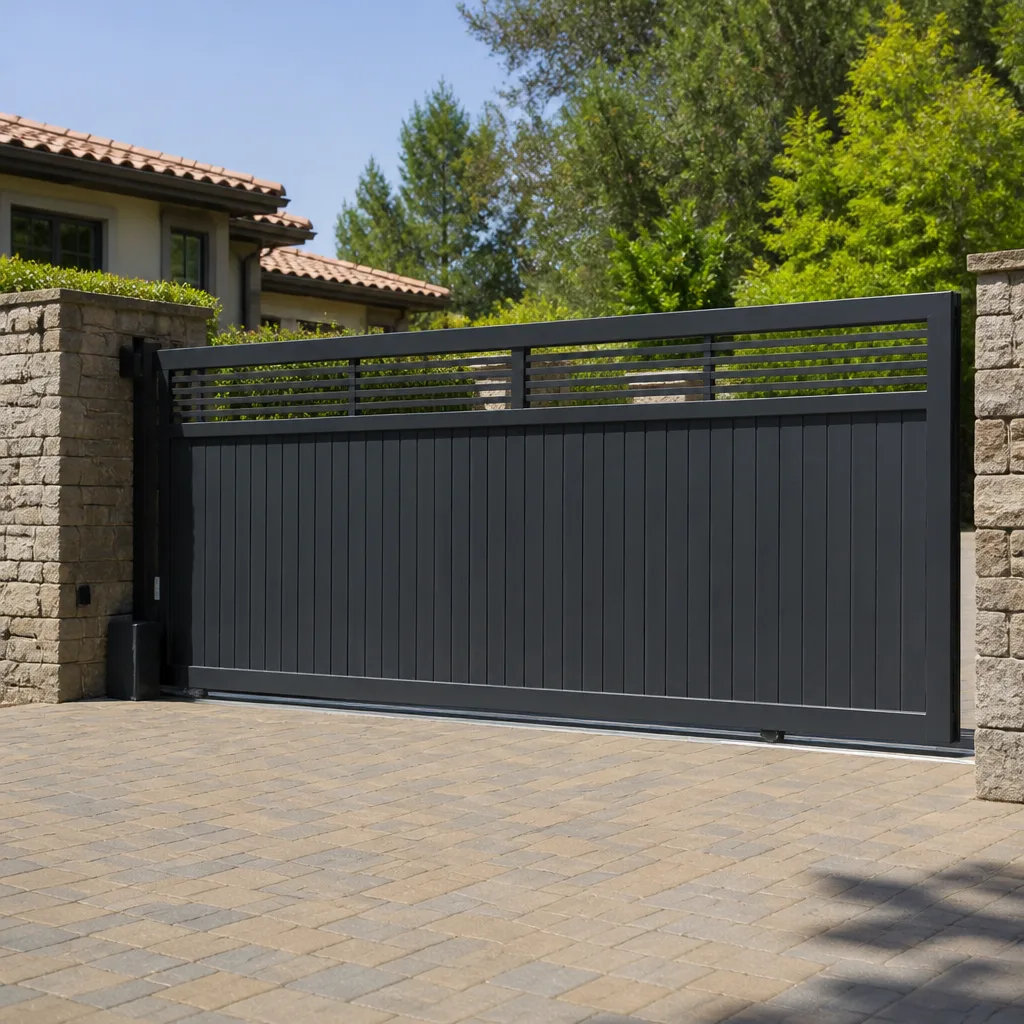 Sliding driveway gates
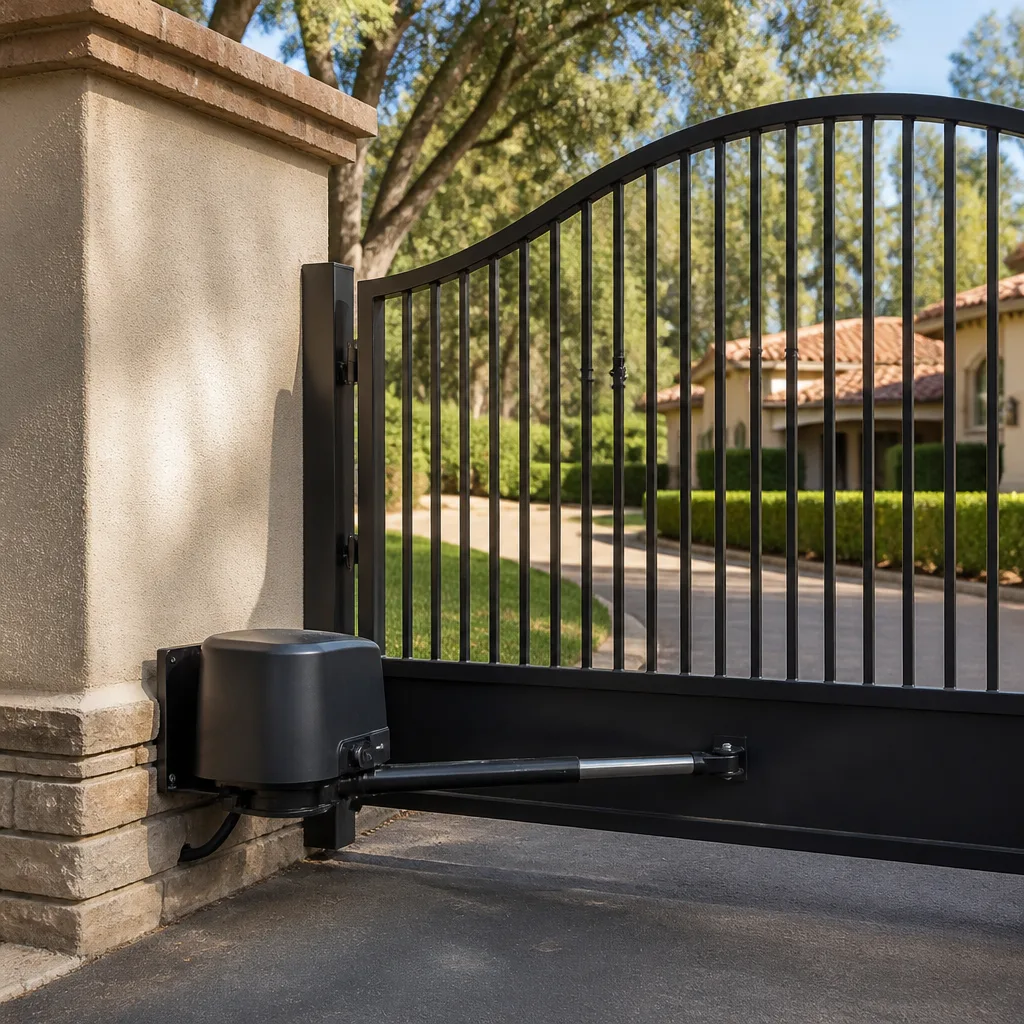 LiftMaster operators
Free on-site gate assessment - hinges, posts, and your LiftMaster or Nice gate operator checked before anything is quoted
The assessment is free and the quote is the invoice.
Get your free estimateGate Repair Emergency Preparedness Guide for Westminster Homes
Most gate emergencies aren’t mechanical failures. They’re information failures. The operator that quits during a February cold snap in Westminster almost never catches the homeowner completely unprepared for the wrong reason: the gate broke, it’s that nobody knows where the manual release is, which model of opener is bolted to the post, or how to get the gate into a safe position before help arrives. The ice storm that hit Douglas County in January 2024 proved the point across dozens of communities at once. Homes where someone had already located the release were moving vehicles in under a minute. Homes that hadn’t were stuck for hours. This guide covers what to know, have, and do before an emergency, not after one.
Quick Answer
The single most important thing a Westminster homeowner can do before a gate emergency is locate and test the manual release on their operator, photograph the model plate, and store that information where every adult in the household can find it. A gate stuck open is a security concern and a gate stuck closed can trap vehicles or strand residents. Knowing your system before it fails is what separates a one-minute fix from a four-hour wait.
Styles & brands we work with
- Wrought iron
- Wood & steel frame
- Farm & ranch
- Sliding driveway gates
- LiftMaster operators
Table of Contents
- What Counts as a Gate Emergency in Westminster?
- How to Find and Use the Manual Release on Your Operator
- How to Hold a Gate Open or Closed Without Damaging the Drive
- Is It Safe to Leave a Stuck Gate Unattended?
- What to Have Ready Before You Call for Service
- Building a Gate Emergency Kit in 20 Minutes
- Colorado Winter, Power Loss, and Gate Operators
- Preventive Checks That Head Off Most Failures
What Counts as a Gate Emergency in Westminster?
Not every gate problem is an emergency, and treating a slow hinge like a crisis wastes time and money. A true emergency has three markers: the gate is blocking a vehicle that needs to leave or enter, the gate has failed in an open position that leaves property exposed, or the gate is moving on its own and creating a crush or strike hazard. Anything else can usually wait for a scheduled visit.
Westminster sits at the edge of the Front Range, where freeze-thaw cycles work on gate hardware all winter. A gate that operated fine in October can bind, sag, or stall in January when ground shifts and metal contracts. That’s not always a failure you need to act on immediately, but it is one you should understand. Here’s how we separate the urgent from the routine:
- Emergency: gate stuck closed with a car trapped inside, gate stuck open on a property line that needs to stay secured, gate moving without command, operator smoking or making a grinding noise, or a gate that has come off its track and is leaning.
- Urgent but not emergency: remote stopped working but the keypad still opens the gate, one leaf of a double gate won’t close, safety sensor is tripping intermittently.
- Scheduled service: gate is slow, noisy, or dragging; a hinge is loose; the operator runs but the gate hesitates before moving.
Being honest about which category you’re in helps you decide whether to call now or book a visit. It also helps the person on the phone route you correctly. At Westminster Gate Repair, we ask a few triage questions up front for exactly this reason, and we’d rather tell you it can wait than send a truck you don’t need.
How to Find and Use the Manual Release on Your Operator
Every automated gate operator has a manual release, and most homeowners have never touched theirs. The release lets you disengage the drive so the gate swings or slides freely by hand. It’s the first thing to reach for when the power is out or the operator has quit, and it’s the reason some households got moving during that January 2024 ice storm while others sat waiting.
The release is different on every brand. On a LiftMaster swing operator the release is usually a keyed lever on the housing that you turn and pull. On Mighty Mule and similar residential slide operators it’s often a key released lever near the motor that disengages the drive gear. FAAC and BFT operators vary by model, but the release is typically a manual override lever or a hex-key release on the housing. The exact location is printed in your operator manual and usually stamped on the housing itself.
Here’s the right way to test it before you ever need it:
- Identify your operator brand and model from the plate on the housing, and photograph it.
- Locate the manual release. Look for a keyed lever, a hex socket, or a pull handle, and check the manual if you’re unsure.
- With the gate closed and the power on but the operator idle, follow the release procedure and gently push the gate by hand. It should move freely.
- Re-engage the release and run the gate once with the remote to confirm it re-locks correctly.
- Write down the release procedure and tape it inside the control box or on a card near the keypad.
Never force a release that won’t move. If it’s seized, that’s a sign of a mechanical problem that needs a technician, not more pressure. We work on the brand you have, from LiftMaster to FAAC, so a model photo and a description of what the release is doing gets us to the right diagnosis fast.
How to Hold a Gate Open or Closed Without Damaging the Drive
When a gate fails, the instinct is to jam something against it, tie it off, or prop it with a brick. Done wrong, that’s how a small repair becomes a drive mechanism replacement. The goal is to take load off the operator, not to fight it.
If the gate is stuck open and you need it secured, disengage the manual release first so the drive isn’t fighting you, then swing or slide the gate to the position you want and secure it at the frame or post, not against the operator arm. Use a strap, a block rated for the gate’s weight, or a temporary pin through the frame if the gate has one. Never wedge anything into the operator housing or between the gate and the drive arm. That’s how gears strip.
If the gate is stuck closed and you need access, the manual release is again the answer. On a slide gate, disengage the drive and push the gate along its track by hand. On a swing gate, release and swing the leaf manually. If a slide gate has come off its track and is leaning, stop. A heavy panel off its track can fall, and that’s a genuine crush hazard. Keep people and vehicles clear and call for service.
Two hard rules apply no matter what:
- Never disable or bypass a safety edge, photo eye, or sensor to get a gate moving. Those devices exist to stop a gate on a person or vehicle.
- Never work on the operator’s wiring or power while the circuit is live. Gate operators run on line voltage and the controls can hold a charge. That work belongs to a trained technician.
A gate held correctly is a gate that survives until we arrive. Held incorrectly, it’s an insurance claim.
Is It Safe to Leave a Stuck Gate Unattended?
Ask three questions. Is the property secure? Is anyone trapped? Can the gate move unexpectedly? If the answer to all three is no, you can usually leave the gate until a scheduled visit. If any answer is yes, treat it as urgent.
A gate stuck open on a property line with no one home is a security concern, full stop. A gate stuck closed with a car inside and no manual release access is a trap, and if that car belongs to someone with a medical need or an emergency, it’s serious. A gate that has moved on its own, or that twitches or cycles without command, is the one to be most careful with: that suggests a control board or sensor fault, and an operator that moves when it shouldn’t is a crush hazard. Keep clear of the path of travel and cut power at the breaker if you can reach it safely.
Westminster neighborhoods range from tight residential streets to larger lots, and how exposed your property is depends on where you sit. A gate on an interior driveway is a different risk than one on a corner lot facing the street. Use judgment that fits your property, and when in doubt, err toward calling. We can talk you through whether it can wait, and if it can’t, fast dispatch from 7am to 7pm, Sunday through Friday gets a technician moving.
What to Have Ready Before You Call for Service
The difference between a two-hour fix and a four-hour fix is often just information. When you call for electric gate repair, having the right details ready lets the person on the phone route the right technician with the right parts the first time.
Have these five things ready before you dial:
- Operator brand and model. Photograph the plate on the housing. “LiftMaster” is a start; the model number narrows the diagnosis considerably.
- Symptom description. “Nothing happens when I press the remote” is different from “the motor runs but the gate doesn’t move” and different again from “the gate opens halfway and stops.” Say exactly what it does and doesn’t do.
- Power status. Is the operator’s breaker tripped? Is the control box lit? Has the power been out recently?
- Access instructions. How does a service vehicle get to the gate? Is there a code, a key, a call box, a gate that needs to be propped? Tell us before we’re on the way.
- Gate type and size. Single swing, double swing, slide, how wide, roughly how heavy. A photo of the full gate helps.
A customer with these five details is a customer we can help in one call. A customer without them often needs a callback, and that costs time. We diagnose before we quote, which means the more we know walking in, the faster the answer.
Building a Gate Emergency Kit in 20 Minutes
This is the 20-minute setup that matters at midnight in a blizzard. You don’t need to buy anything. You need to gather, write down, and store a small amount of information where the whole household can find it, including whoever is house-sitting or staying over.
Put together the following:
- A photograph of the operator model plate, stored in your phone and printed once for the kit.
- A written manual-release procedure for your specific operator, with the brand named (Mighty Mule, LiftMaster, BFT, FAAC, and others each differ).
- Every access code in the household, written down in one place: keypad codes, remote codes, call-box numbers. If you can’t remember the code during a power failure, it’s not documented.
- A labeled manual release location. Put a small sticker or tag on the housing so anyone can find the release quickly.
- Emergency contact for your gate service, on file and visible, not buried in an old text thread.
- A flashlight in the kit, because a power failure at night is the most common trigger.
- Operator quits with the gate closed. Usually a control or power issue. The manual release gets you moving; service fixes it correctly.
- Gate binds mid-travel. Cold contraction and ground shift can make a slide gate drag on its track or a swing gate catch on its post. Forcing it makes it worse.
- Safety sensor tripped by ice or debris. Photo eyes and safety edges exist to stop the gate. When they read a fault, the gate won’t close. That’s a safety feature doing its job, and it needs inspection, not a bypass.
- Test the manual release. Disengage, push by hand, re-engage, run once. Every six months.
- Watch the gate travel. Does it move smoothly end to end, or hesitate and drag? Hesitation is a sign.
- Check the hinges and rollers. Look for rust, play, or anything loose. Don’t oil heavily; ask a technician what the manufacturer recommends.
- Clear the sensors. Wipe the photo eyes and clear debris from the safety edges. Ice and dirt are the top cause of phantom trips.
- Confirm the safety equipment works. Walk into the gate’s path while it closes (with someone else at the controls, and from a safe distance) and confirm it reverses or stops. If it doesn’t, that’s a call.
- Check the battery backup if your operator has one, and replace it on the recommended schedule.
This is not a tool kit. It’s an information kit. The tools stay in the truck of whoever you call. What you’re building is a way for anyone in the house to act correctly before a technician arrives. From a single broken hinge to a full automated system installation, the households that handle emergencies best are the ones that planned for them in the quiet months.
Colorado Winter, Power Loss, and Gate Operators
Westminster winters are the single biggest source of gate emergencies on the Front Range. Freeze-thaw cycles move ground, contract metal, and stress every moving part. Add the occasional ice storm that takes out power to a whole subdivision, and the recipe for a stuck gate is set before anyone touches it.
Three failure patterns dominate our winter calls:
If your operator is behind a gate repair call this winter, our advice is to get the manual release tested now, before the first hard freeze. It’s the difference between rolling your car out in two minutes and waiting hours for a truck that can’t reach you on an icy road. We answer 24/7. Fast dispatch from 7am to 7pm, Sunday through Friday.
Preventive Checks That Head Off Most Failures
Most gate emergencies give warning signs first. A gate that’s been running a little slow, a hinge that’s started to squeak, a keypad that takes two tries. None of that is an emergency. All of it is a reason to schedule a visit before an emergency finds you.
Run through this short checklist seasonally, ideally before winter:
Maintenance is a one-time visit, priced per job after we look at the gate. There’s no plan to sign up for. If you’re in Highlands Ranch or anywhere in the Westminster area, a seasonal check is the cheapest way to avoid the 11 p.m. call.
Common Mistakes to Avoid
We see the same handful of mistakes turn small gate problems into expensive ones. Each of these is specific to the way gates actually fail:
- Never testing the manual release until you need it. That’s the number-one reason households get stranded. Test it before winter with the gate in a safe position.
- Jamming or strapping a gate against the operator arm. It can strip gears and turn a control fix into a drive replacement. Secure at the frame, not the arm.
- Bypassing a safety edge or photo eye. Those devices exist to prevent a crush. Disabling one to get the gate moving is exactly the wrong move.
- Forcing a release that won’t move. A seized release is a mechanical sign. Forcing it can bend a linkage and add a second problem.
- Calling for service without the model number. “My gate is broken” takes longer to diagnose than “my BFT slide operator runs but the gate doesn’t move.”
- Working on the operator wiring yourself. Gate operators run on line voltage. That work belongs to a trained technician, and no manual-release procedure requires you to touch the wiring.
- Leaving a gate off its track and propped up. A heavy panel off its track can fall. Keep people clear and call for service.
See the difference
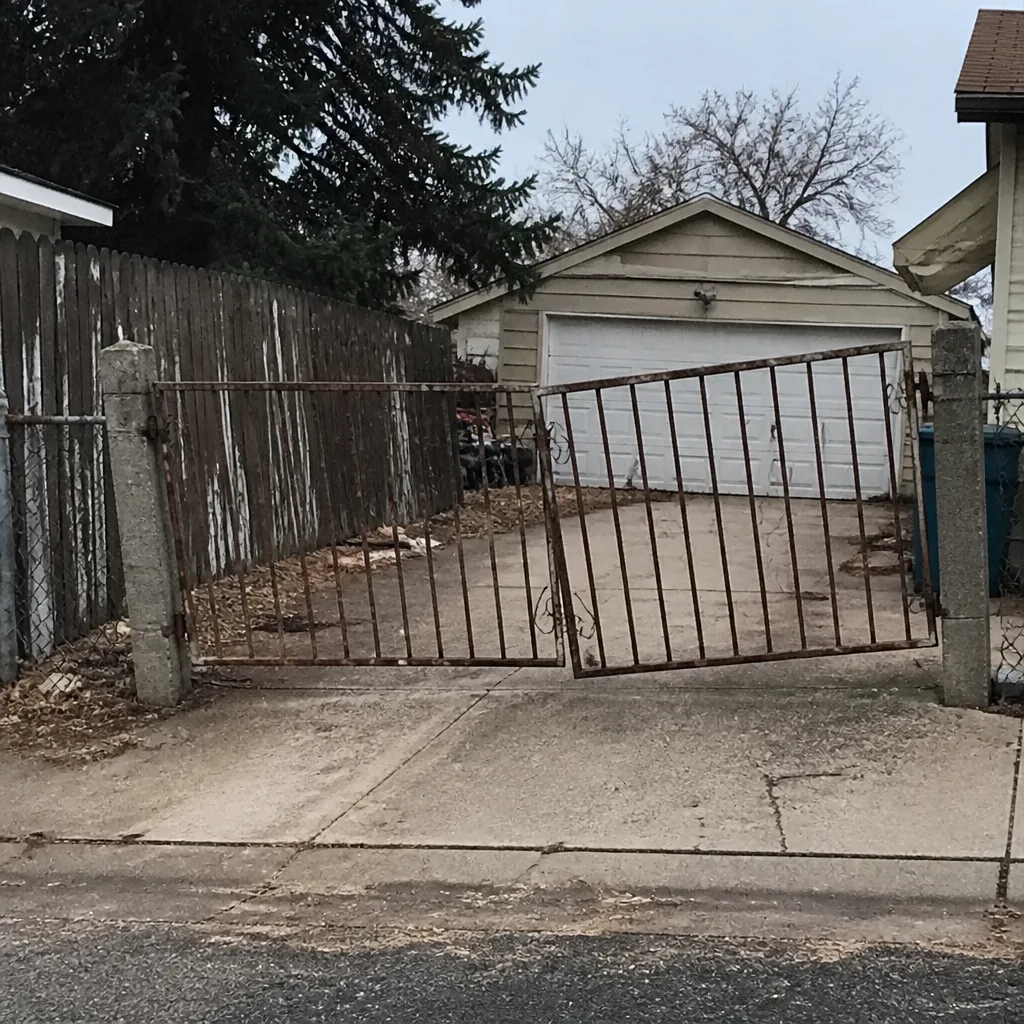 Before
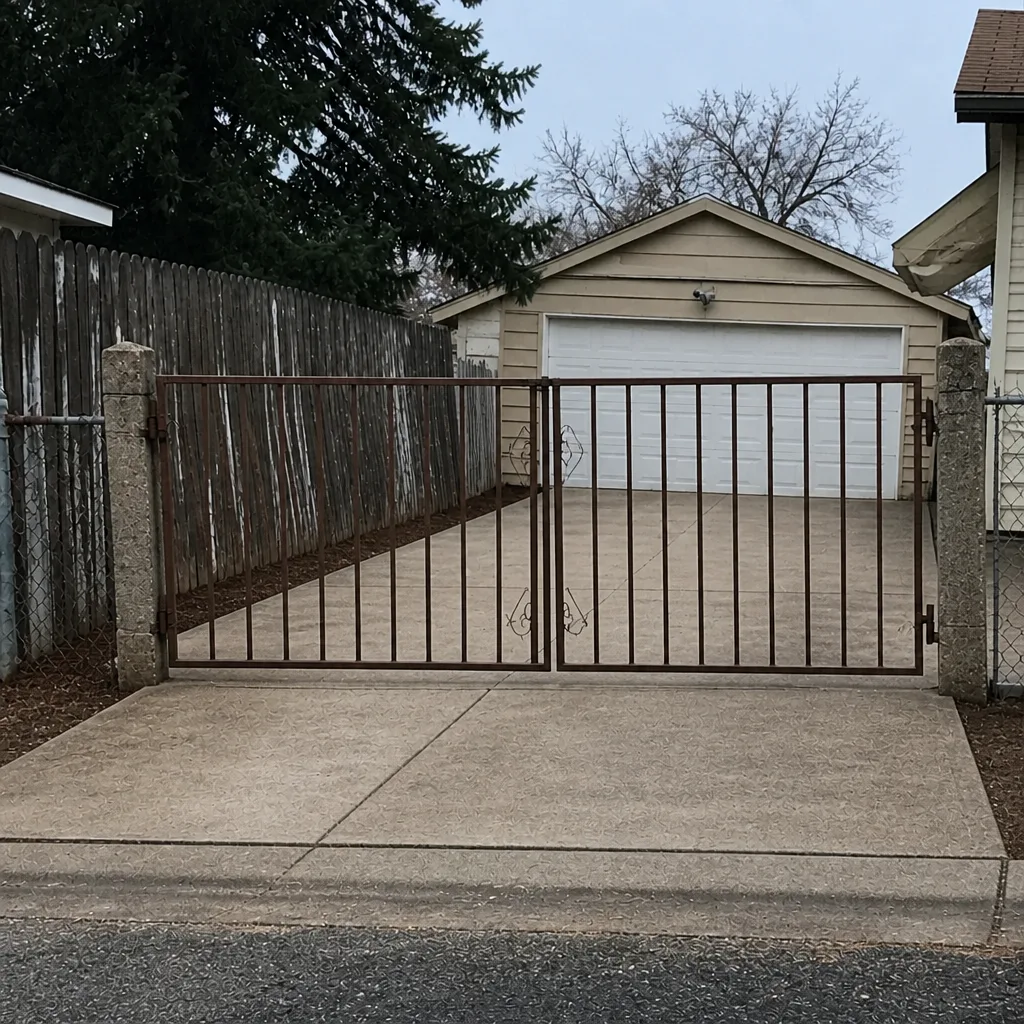 After
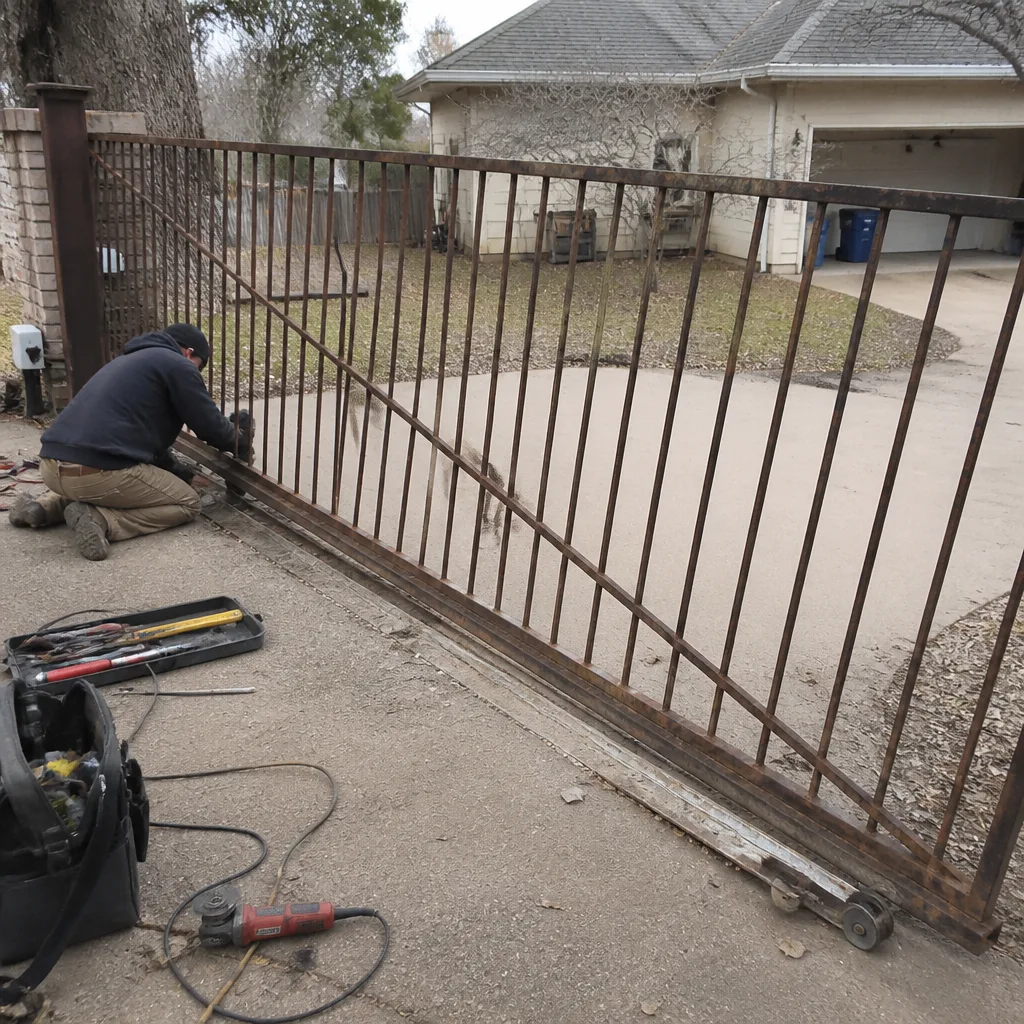 Before
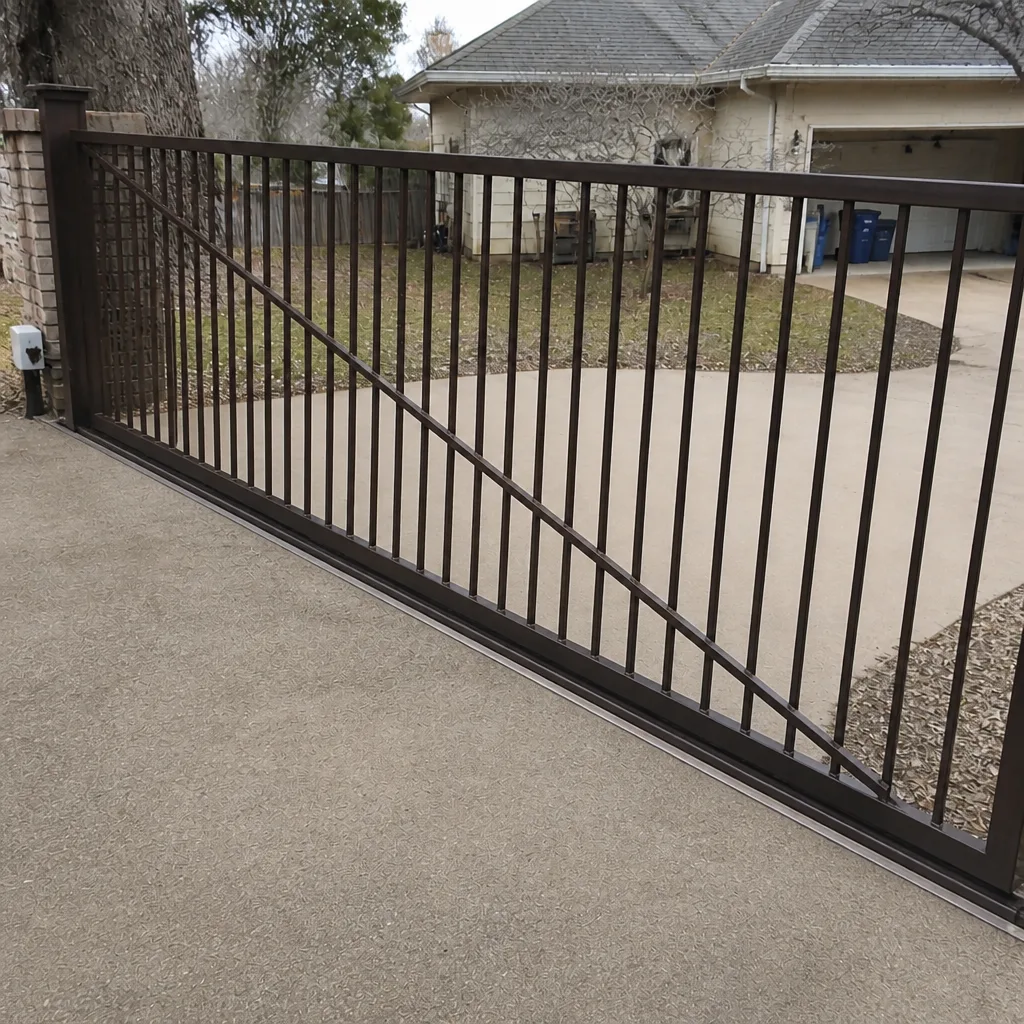 After
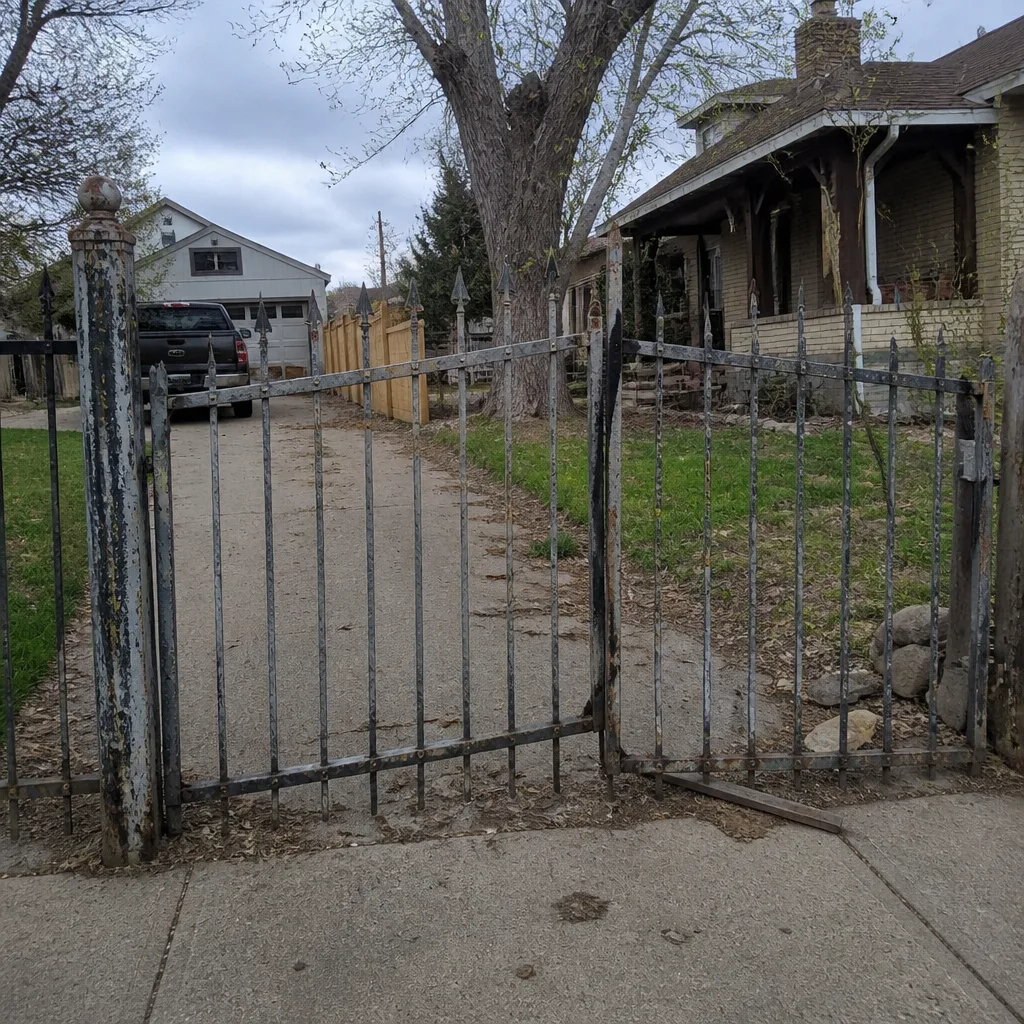 Before
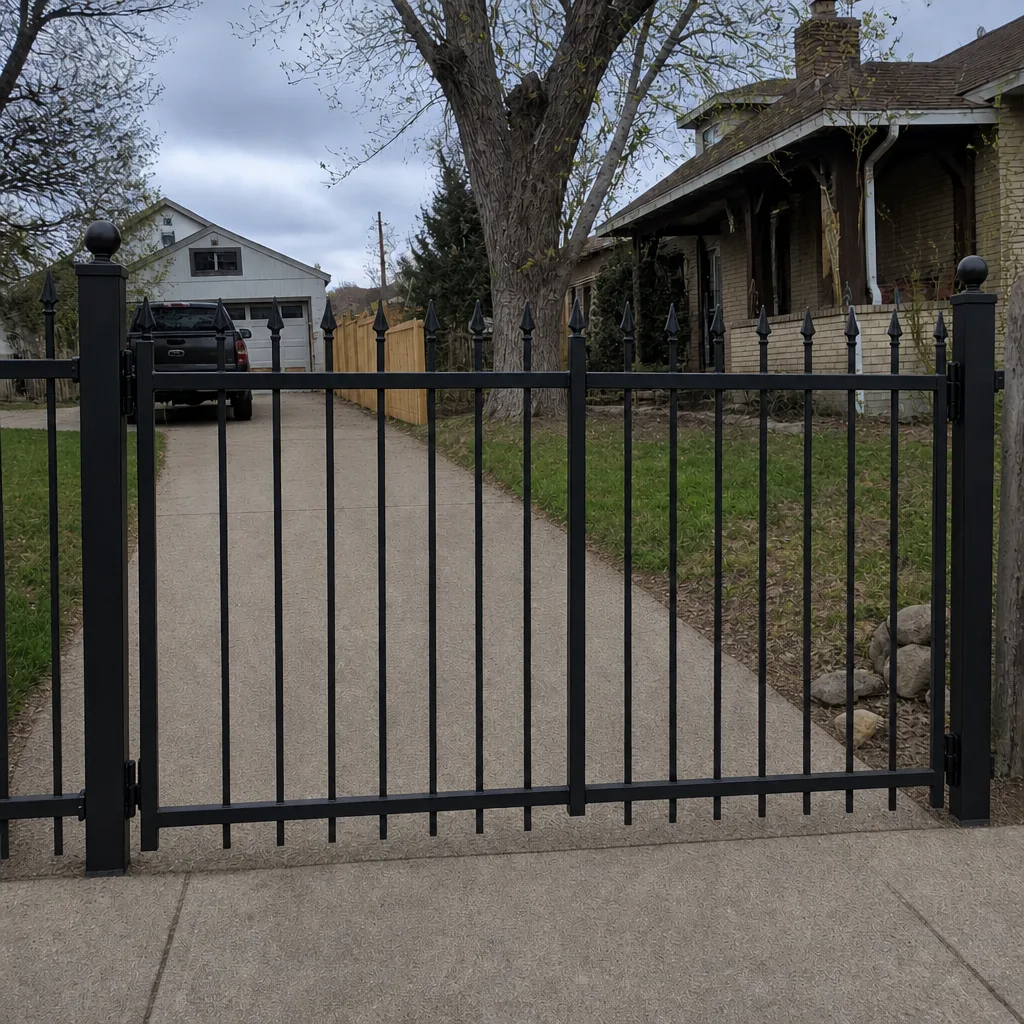 After
When to Call a Professional
Call a professional when the problem is mechanical, when the operator’s power or control board is involved, when a safety device is failing, or when a heavy gate is off its track or moving on its own. Also call when your manual release won’t disengage, when the gate has started moving without a command, or when you smell burning from the operator housing. Those are always professional calls. Don’t force a release or bypass a safety device; that’s how a repair becomes an injury.
Westminster Gate Repair offers free estimates in Westminster. Call (833) 348-9387. We answer 24/7. Fast dispatch from 7am to 7pm, Sunday through Friday. The price is set per job by a written estimate, agreed before any work starts. We’re a gate specialist, not a generalist, and electric and automated gate systems are our core, not a side job.
Frequently Asked Questions
Locate and use the manual release to get vehicles moving, then note the operator model and the exact symptoms before you call. Don’t jam the gate or bypass a safety sensor. Have the model plate photographed and a description ready, and you’ll get the fastest diagnosis.
It depends on the brand. On a LiftMaster swing arm it’s usually a keyed lever on the housing; on a Mighty Mule slide operator it’s typically a key-release lever near the motor; FAAC and BFT models vary by model number. The exact location is in your operator manual and often stamped on the housing. If you can’t find it, call us with the model number and we’ll walk you through it.
Only if the property is still secured and no one is at risk. A gate stuck open on a property line is a security exposure, and a gate moving on its own is a hazard you should not leave unattended. Cut power at the breaker if you can reach it safely and keep people clear. Call us to decide whether it can wait. We answer 24/7. Fast dispatch from 7am to 7pm, Sunday through Friday.
Most likely a safety sensor is reading a fault from ice, snow, or debris, or the gate is binding cold. Photo eyes and safety edges stop the gate on any obstruction by design. Clear the sensors and look for drag on the track. If the safety devices themselves are failing, that needs a technician, not a bypass.
Operator brand and model, what the gate does and doesn’t do, whether power is on, how a service vehicle reaches the gate, and the gate type and size. A photo of the full gate and the model plate helps most. These details often mean the difference between a quick fix and a longer wait.
Yes. We’re factory-familiar with LiftMaster, FAAC, BFT, Linear, Viking, Ghost Controls, DoorKing, Elite, and Mighty Mule, and we work on the brand you have, not a generic substitute. Our technicians are trained across competing platforms, so the recommendation fits your gate instead of whatever’s easiest to stock. Call (833) 348-9387 for a free estimate.
The Bottom Line
Gate emergencies in Westminster are rarely unpredictable. The ice storm that hit Douglas County in January 2024 showed that the homeowners who came through best weren’t the ones with the newest operators. They were the ones who’d taken 20 minutes to find their manual release, photograph their model plate, and write down their codes. Do that now. Test the release. Document your access codes. Keep a flashlight and an emergency contact where the whole household can find them. Check the gate before winter, and don’t force anything that’s seized or bypass anything that’s failing. When it’s genuinely a professional call, call us.
Call (833) 348-9387 for a free estimate. We answer 24/7. Fast dispatch from 7am to 7pm, Sunday through Friday. Westminster Gate Repair provides gate repair, electric gate repair, and gate installation, and the price is set per job by a written estimate agreed before any work begins.
Written by the team at Westminster Gate Repair, serving Westminster since 2018.