
Last updated November 14, 2026
 Wrought iron
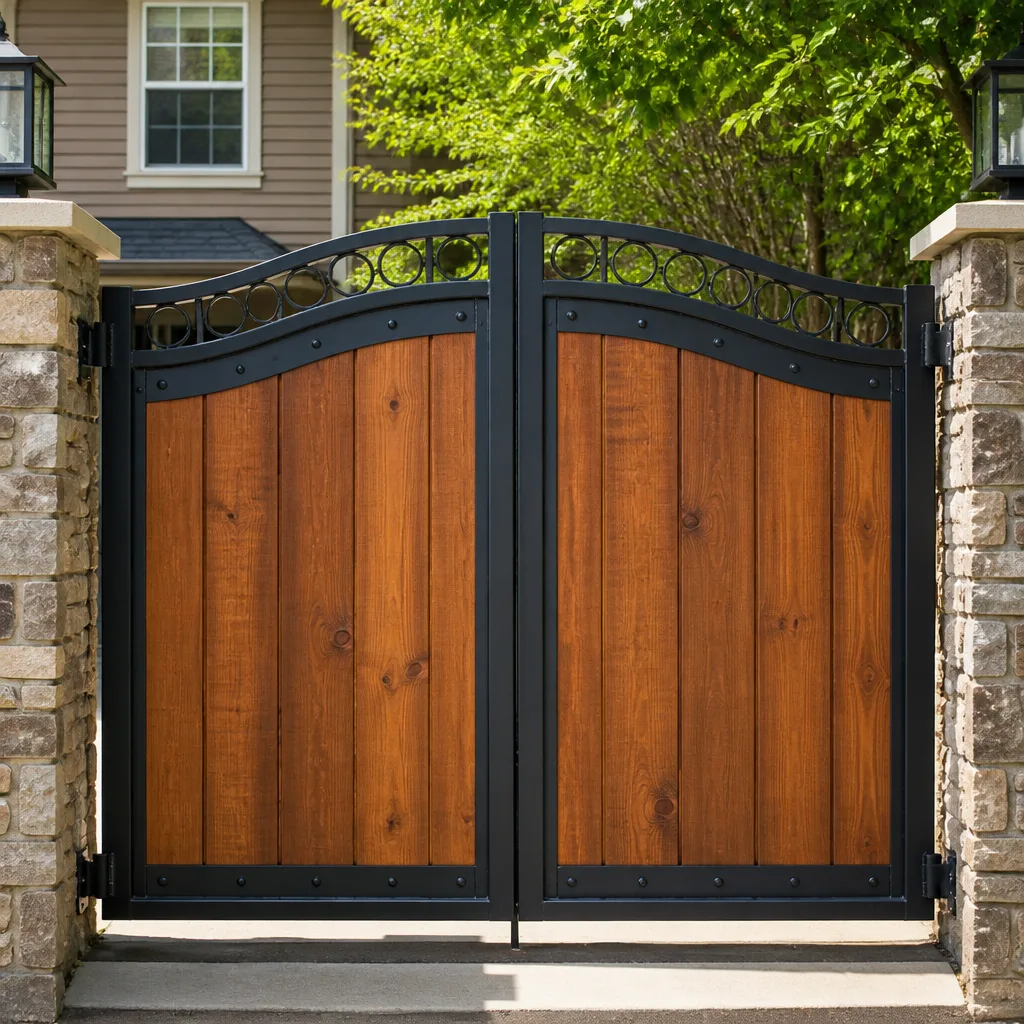 Wood & steel frame
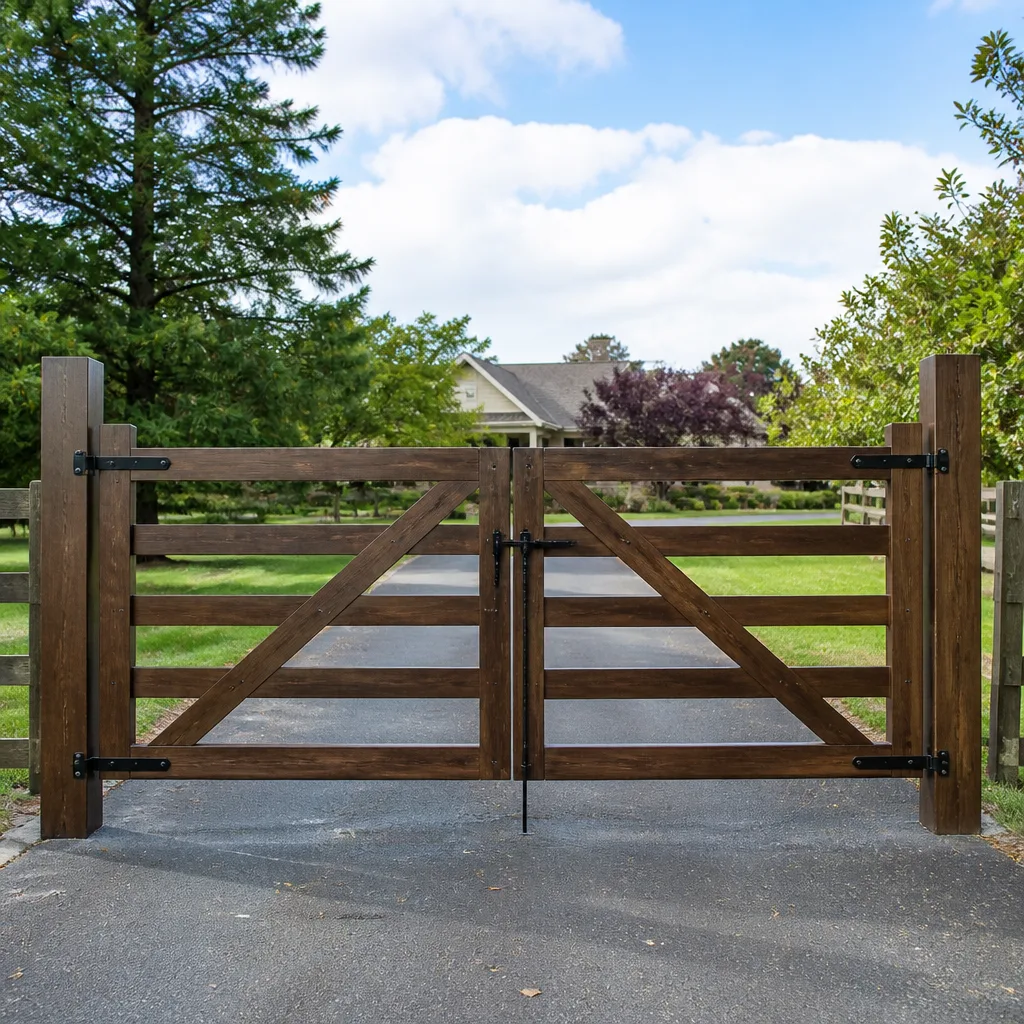 Farm & ranch
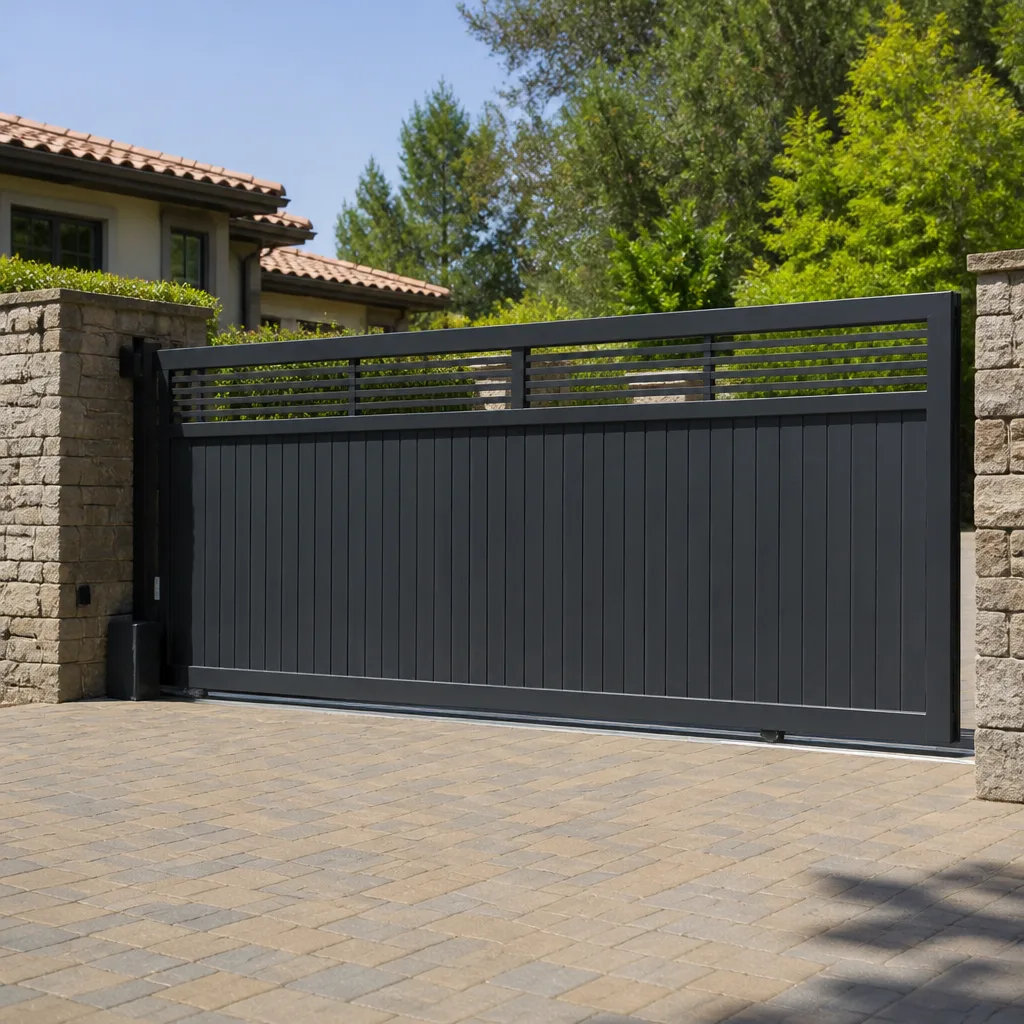 Sliding driveway gates
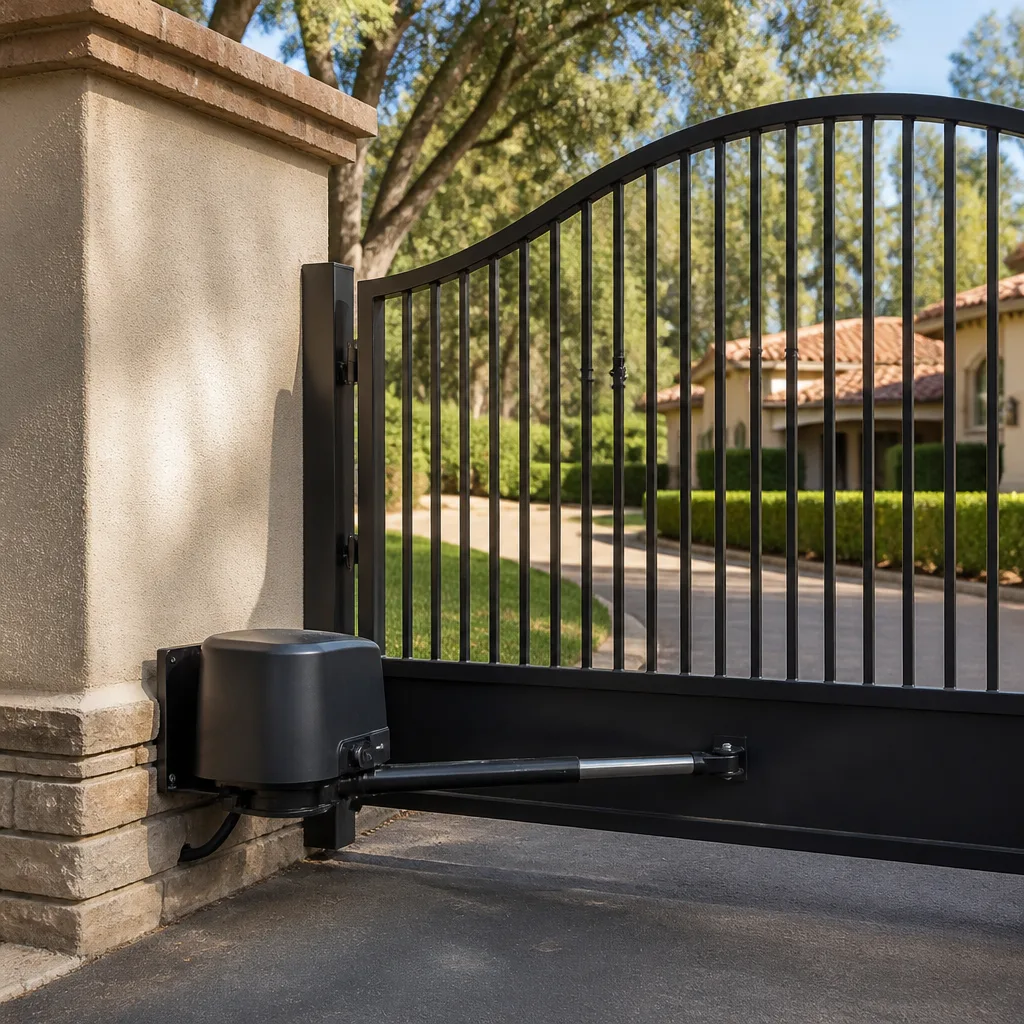 LiftMaster operators
Free on-site gate assessment - hinges, posts, and your LiftMaster or Nice gate operator checked before anything is quoted
The assessment is free and the quote is the invoice.
Get your free estimateDIY vs Professional Gate Repair: The Westminster Homeowner’s Decision Guide
Replacing a gate access keypad is a legitimate DIY task. Adjusting an automated gate’s limit switches is not, and not because it’s technically hard. An incorrect limit setting lets the operator overtravel, strips the drive gear, and can void the manufacturer warranty in a single cycle. The real question in Westminster isn’t whether you’re handy enough. It’s whether the specific task in front of you carries risk out of proportion to what it saves you. This guide lays out which gate jobs belong in your hands, which belong with a specialist, and where Colorado code and homeowner association rules draw the line.
Quick Answer
Homeowners can safely handle cosmetic and low-risk gate tasks: replacing a keypad, cleaning sensors, basic lubrication, and clearing debris from the track. Anything involving the operator, limit switches, control boards, wiring, safety sensors, or heavy panels requires a trained technician. In Westminster, some tasks also run into permit and HOA documentation requirements, and most automated gate manufacturers void mechanical warranty coverage when adjustments are made by anyone other than a qualified technician.
Styles & brands we work with
- Wrought iron
- Wood & steel frame
- Farm & ranch
- Sliding driveway gates
- LiftMaster operators
Table of Contents
- The Gate Repair Task Matrix: What You Can Do vs What Needs a Specialist
- The Warranty Clause Most Homeowners Never Read
- UL 325 Entrapment Protection and Why Sensor Adjustments Are Risky
- Colorado Code, Permits, and What Non-Licensed Work Can’t Cover
- How Highlands Ranch HOA Rules Affect DIY Gate Work
- What “I’ll Try It First” Actually Costs When It Goes Wrong
- Westminster Climate and Your Gate System
- A Safe DIY Checklist for Westminster Homeowners
The Gate Repair Task Matrix: What You Can Do vs What Needs a Specialist
Not every gate problem needs a truck in your driveway. The split comes down to three categories: tasks that are genuinely yours, tasks that need a specialist, and tasks that are a problem regardless of who does them.
Safe for most homeowners:
- Replacing a standalone access keypad or intercom unit on an existing circuit
- Cleaning dust and debris off photoelectric safety sensors with a soft cloth
- Lubricating hinges, latches, and roller tracks with a product appropriate to the mechanism
- Clearing gravel, leaves, or ice-melt residue from a slide gate’s track
- Replacing a dead remote battery or resetting a remote that lost pairing
- Wiping down panels and tightening visible fasteners that have loosened but aren’t load-bearing
Requires a trained technician:
- Adjusting or replacing limit switches on an automatic operator
- Any work inside the operator housing or on the control board
- Diagnosing a gate that moves erratically, reverses unexpectedly, or fails to close
- Replacing a drive gear, chain, or arm on a motorized system
- Repairing the power run to the operator or any part of the electrical circuit
- Realigning heavy slide or swing panels that have moved off their track
- Replacing a safety reversing sensor and verifying its force threshold
Prohibited under Colorado code for unlicensed individuals: electrical work beyond swapping a plug-in device on an existing circuit, altering a gate installation that requires a permit, and any structural modification to gate posts or anchors. Colorado requires electrical work to be done by a licensed electrician, and most cities and counties require a permit for new gate installations or changes to an existing electrical hookup.
If you’re not sure which category your problem falls into, the fastest answer is usually a phone call. Call (833) 348-9387 and describe what the gate is doing. We answer 24/7.
The Warranty Clause Most Homeowners Never Read
Here’s the part of this decision most online guides skip. Automated gate manufacturers, including LiftMaster, FAAC, and BFT, typically include a clause in their warranty documentation that void mechanical coverage when adjustments are performed by anyone other than a qualified technician. The word “qualified” is doing heavy lifting. It usually means “someone working within the manufacturer’s service network or an experienced technician trained on that platform.”
What makes this worth knowing is that the clause can trigger even when the homeowner does the adjustment correctly. You could dial in the limit switches to a standard you’re satisfied with, and the manufacturer can still decline a claim on a drive gear that fails later, because the service record shows unqualified work on the operator. There’s no way to prove the fault wasn’t related.
Here’s the pattern we see in Westminster: the mechanical repair itself is often reasonable. What catches people is a motor failure six months later, when the manufacturer pulls the service history and denies the claim. A gate that’s outside warranty is a simpler equation, but if your system is still covered, the warranty risk is worth weighing against whatever you’d save on the repair.
For homeowners on brands like Linear or LiftMaster, that coverage can be a meaningful reason to have a trained technician handle any operator work. When we diagnose a gate, we check what warranty may still be in force and let you know before any adjustment is made. Electric gate repair is one of our core services and where this question comes up the most.
UL 325 Entrapment Protection and Why Sensor Adjustments Are Risky
Every automatic gate sold in the US is designed to meet UL 325, the safety standard that requires entrapment protection: the gate must reverse or stop when it detects an obstruction. That protection depends on sensors, and the sensors must be installed and tested against the specific force the gate generates.
What makes sensor adjustment different from other repairs is what happens when it’s wrong. A misadjusted sensor or a force setting that’s too high doesn’t announce itself. The gate runs fine. Then one day it doesn’t reverse, and someone or something is caught in the path. The liability for that outcome falls on the person who made the adjustment, and the property owner. And the liability doesn’t wash out when a professional shows up later. If a professional services the gate without verifying the safety system, the exposure stays.
Force testing a gate system requires equipment and a baseline reference to work from. You can’t eyeball it. The proper sequence:
- A technician checks the physical travel of the gate and the position of the reversing sensor pair.
- Force threshold is measured using a calibrated testing device at multiple points along the path.
- The operator’s force setting is adjusted within the manufacturer’s specified range.
- The system is cycled and retested to confirm consistent reversal behavior.
- The service record documents the force readings so the standard is on file.
That last point matters for property managers and HOA documentation. If you can’t produce a record of safe force settings, you’re exposed if anyone is injured. This is the single strongest argument against DIY safety system work, and it has nothing to do with whether you’re technically capable.
We handle electric gate systems as a primary specialty, not as a sideline, which is why sensor and force testing gets done properly. You can learn more about our Westminster Gate Repair approach to diagnostics before we quote. The principle is simple: we diagnose before we quote, and safety systems are always verified, not assumed.
Colorado Code, Permits, and What Non-Licensed Work Can’t Cover
Colorado is a home rule state. Contractor licensing is handled mostly at the city and county level, and permits are issued by the local building department. The practical upshot is that the rules for a gate job in Westminster may differ slightly from Highlands Ranch or the surrounding communities.
Two hard lines apply everywhere: electrical work must be done by a licensed electrician, and any structural change to a gate installation usually requires a permit. Swapping a keypad that plugs in or attaches to an existing low-voltage circuit is not the same as running a new power line to a gate operator. The second one is electrical work, and it’s a legal matter before it’s a gate matter.
What this means for the DIY decision:
- If your plan involves running wire, opening a panel, or tapping into an existing branch circuit, that’s a licensed electrician’s job, not just a gate technician’s.
- If your plan involves pouring a new footing, changing post placement, or altering the hinge configuration on a gate large enough to require a permit, call your city’s building department and ask.
- If your plan is a same-part replacement on an existing installation, the answer is usually no permit, but it depends on the jurisdiction.
- If your property is in an HOA, there are almost always additional rules. See the next section.
The other part of this that isn’t about code but about coverage: most homeowners insurance policies protect you against third-party claims from hazardous activity on your property, but a claim arising from what the insurer regards as unqualified electrical work can be contested. Ask your insurer what they expect, not just what the code says. The two answers don’t always match.
We are not the entity to sign off on electrical permits, and we’re not licensed electricians. When a gate repair in Westminster needs electrical work, we work with the appropriate trade and make sure the gate side is handled correctly. That’s part of why being a specialist matters: we know where our work ends and another trade begins.
How Highlands Ranch HOA Rules Affect DIY Gate Work
HOAs in Highlands Ranch and other planned communities across the Westminster area frequently require documentation when a gate is modified, even when the modification looks cosmetic. The rules typically come down to appearance standards: gate color, finish, hardware style, or the visible profile of a repaired section. Repainting a gate or replacing a panel with a different material can trigger a documentation requirement that has nothing to do with whether the repair itself was sound.
What this means in practice:
- Check your HOA’s design guidelines before any change that affects how the gate looks from the street.
- For any change that affects the gate mechanism, the HOA may ask for a licensed contractor’s documentation, even if you did the work. That’s hard to produce retroactively.
- Some communities require written notice before any modification to a common boundary gate or shared gate system.
- For gate systems on property lines shared with a neighbor, both owners may need to be involved.
The pattern we’ve seen is that the documentation is the sticking point, not the work itself. A homeowner can do a clean, code-compliant repair and still find themselves asked to demonstrate it was done properly. Having a written record from a qualified technician solves that in one step.
If you’re in an HOA and need a repair that could require documentation, a gate repair visit that covers both the mechanical fix and the service record is usually the simpler path. It’s less about the gate and more about the paperwork. We handle jobs in different HOAs across the Westminster area, and we’re familiar with how they differ.
What “I’ll Try It First” Actually Costs When It Goes Wrong
The trap of DIY is the assumption that a failed repair is a neutral outcome. It isn’t. A failed repair on a gate system usually costs more than the original repair would have, because it leaves the equipment in a worse state than it started.
The patterns that are common enough to be worth naming:
- Stripped drive gear. A limit switch adjusted to the wrong position lets the operator overtravel on every cycle. The gate works, then stops working, then needs a replacement gear. The repair that started as a limit adjustment becomes a gear replacement.
- Grounded control board. Opening an operator housing while the power is live can short the board. A replacement board is a more expensive part than the diagnostic that would have found the actual problem.
- Sensors misaligned or mis-calibrated. A misadjusted sensor causes the gate to reverse when nothing is there, or fail to reverse when something is. The first symptom leads homeowners to keep adjusting, which makes the second worse.
- Hinge or track damage from moving a heavy panel. Panels that are physically supported at both ends by the mechanism are hard to move without load support. Attempting it can bind a hinge or drop a panel off the track.
- Warranty void on a covered part. The most invisible cost. The part that fails later isn’t covered, and you find out at the worst possible time.
We’ve seen all of these in our own work around Westminster. What they have in common is that the undone DIY attempt takes more technician time than the original repair would have. The compound cost is usually not the part; it’s the diagnosis of what was changed on top of what was already broken.
The math is simple: when you call with a problem, the diagnostic is free, and the price is set per job by the written estimate. When you call after a DIY attempt, the technician has to walk through two failure modes instead of one. Highlands Ranch is a good example of an area where we do both kinds of calls regularly, and the difference in technician time is noticeable. If you’re on the fence, call (833) 348-9387 and describe what’s happening. Fast dispatch from 7am to 7pm, Sunday through Friday.
Westminster Climate and Your Gate System
Westminster’s climate adds a set of wear patterns that homeowners moving here from other regions don’t anticipate. The combination of high-altitude sun, wide temperature swings between day and night, dry air in most seasons, and freeze-thaw cycles in winter puts specific stress on gate hardware.
What that looks like:
- Sun degradation on plastic and rubber components. Sensor lenses, keypad housings, and operator covers take more UV per year here than at lower elevations. Plastic parts fail earlier, and the surface can become brittle enough to crack when handled.
- Temperature-driven track swelling and contraction. Gate tracks and guide rails expand and contract with the swings. A gate that works all summer can bind in winter when clearances tighten.
- Ice-melt residue on rollers and hinges. The chemical track that’s liberally applied here leaves residue that dries into hinges and rollers. Debris in a roller is one of the most common causes of a gate that “just needs help.”
- Wind-driven debris in sensor paths. The seasonal wind and the dust it carries will land on photoelectric sensors. Cleaning them is one of the most homeowner-appropriate fixes on the whole list.
The reason climate matters to the DIY decision: some of these wear patterns are indistinguishable from an operator fault to a homeowner. A gate that closes hard in the cold reads as a sensor problem or a limit switch adjustment. It’s often just a track expansion issue that resolves with a hardware adjustment. If you’re sure it’s the operator, you’re often sure of the wrong thing.
A Safe DIY Checklist for Westminster Homeowners
Here’s what we recommend checking before you decide on a call. These are checks, not repairs. Everything on this list is safe to do with the power to the operator turned off and the gate in the open position.
- Turn off power to the operator. Find the breaker or the disconnect switch before you touch anything. Confirm the gate won’t move.
- Check the track and rollers for debris. Clear leaves, gravel, ice-melt residue, and organic matter. A surprising number of “broken gates” are just this.
- Wipe the photoelectric sensor lenses with a soft dry cloth. Do not adjust the alignment on your own; the alignment is part of the safety system.
- Look at the hinges and latches. Loose fasteners, obvious rust, or a hinge that won’t seat are worth noting for the technician.
- Note what the gate does wrong. Does it reverse mid-travel? Fail to close? Grind? Write it down. This saves technician time and shortens the diagnostic.
- Check the keypad and remote function. A dead keypad is often a battery or pairing issue; a keypad that lights up but doesn’t respond is usually wiring or the access control board.
- Restore power and watch a full cycle. Observe the gate through open and close. Don’t intervene physically.
- Write down which brand is on your operator. LiftMaster, FAAC, BFT, and Linear all have different control architectures, and knowing the brand helps a technician prepare.
If all of that is fine and the gate still misbehaves, it’s technician territory. Call (833) 348-9387. We answer 24/7.
Common Mistakes to Avoid
- Adjusting limit switches without checking warranty status. A limit switch adjustment is a warranty event on most automated gates. Check whether your coverage is still active before you touch the operator.
- Using lubricant on the wrong surfaces. Grease on a track attracts grit and accelerates wear. Dry products belong on tracks and rollers; grease belongs on hinges and latches. Applying the wrong one is a common cause of a gate that starts binding weeks after a “fix.”
- Assuming the sensors are misaligned when the track is the problem. In Westminster’s winter, a gate that reverses repeatedly is as often a track expansion issue as a sensor fault. Adjusting sensors to compensate creates a safety problem.
- Moving a heavy panel without proper support. Panels that look manageable weigh more than they appear to. Without the right support, they can drop off the track or damage a hinge.
- Forgetting the HOA before changing the visible appearance. A new hardware profile, paint color, or panel material can trigger documentation requirements in Highlands Ranch and similar communities.
- Trying a repair before a diagnostic. A free estimate before you touch anything gives you a baseline. A visit after a DIY attempt costs more technician time because the problem set is now larger.
- Running a new power line to the gate yourself. This is electrical work. Licensed electrician territory, and the code requirement isn’t negotiable.
See the difference
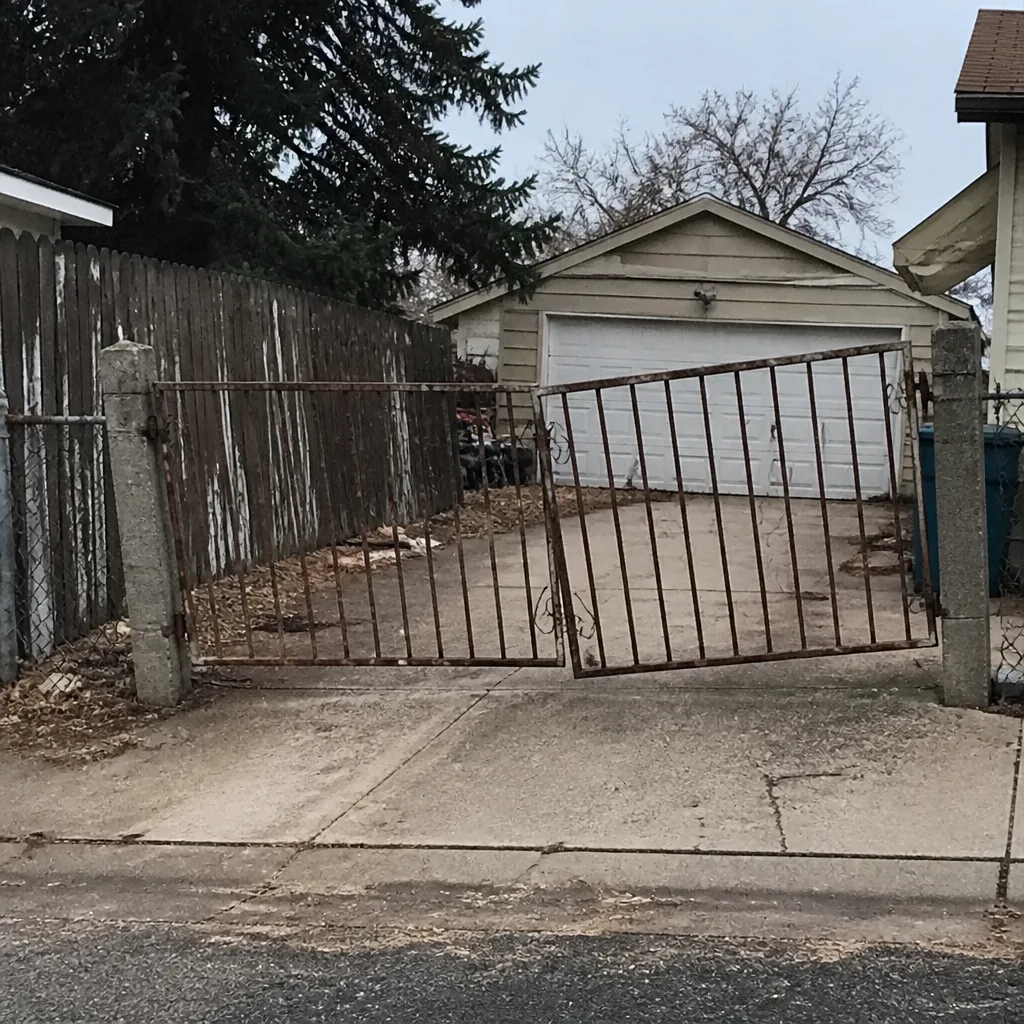 Before
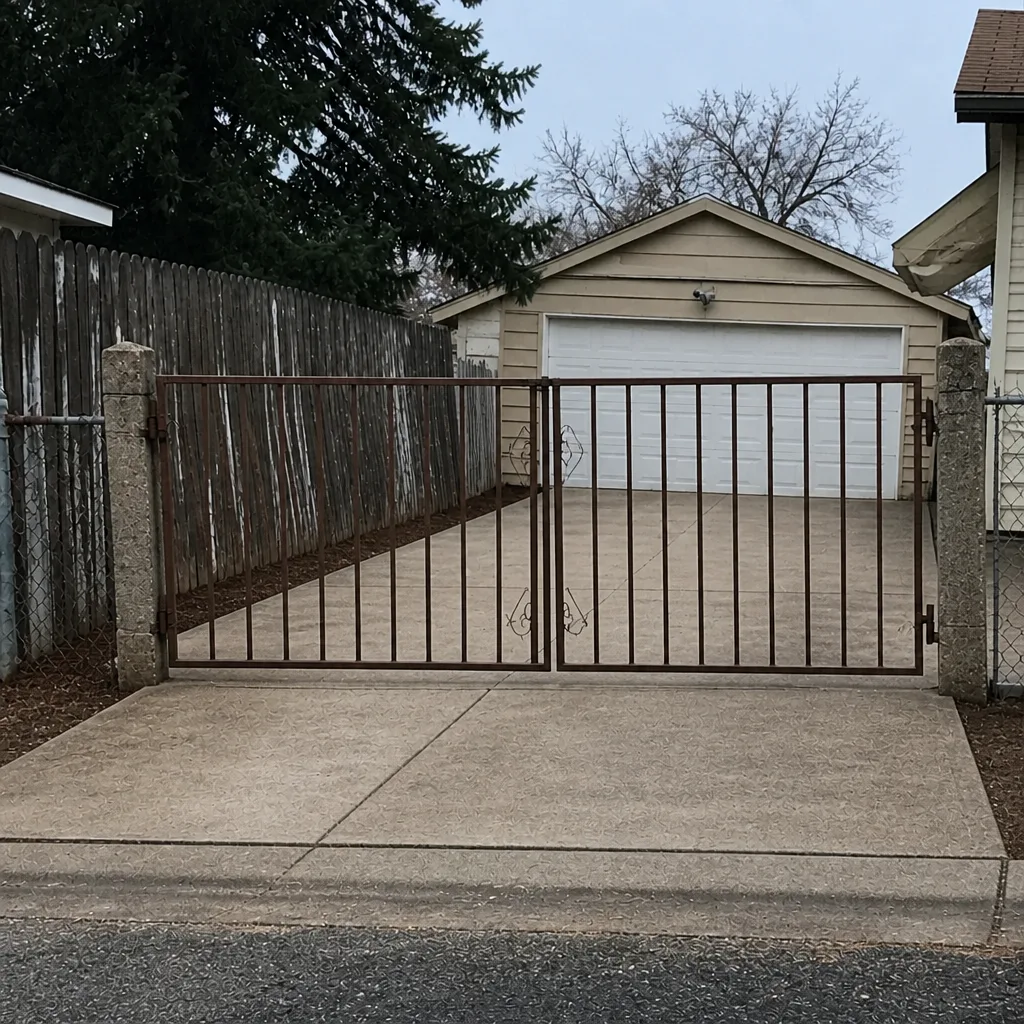 After
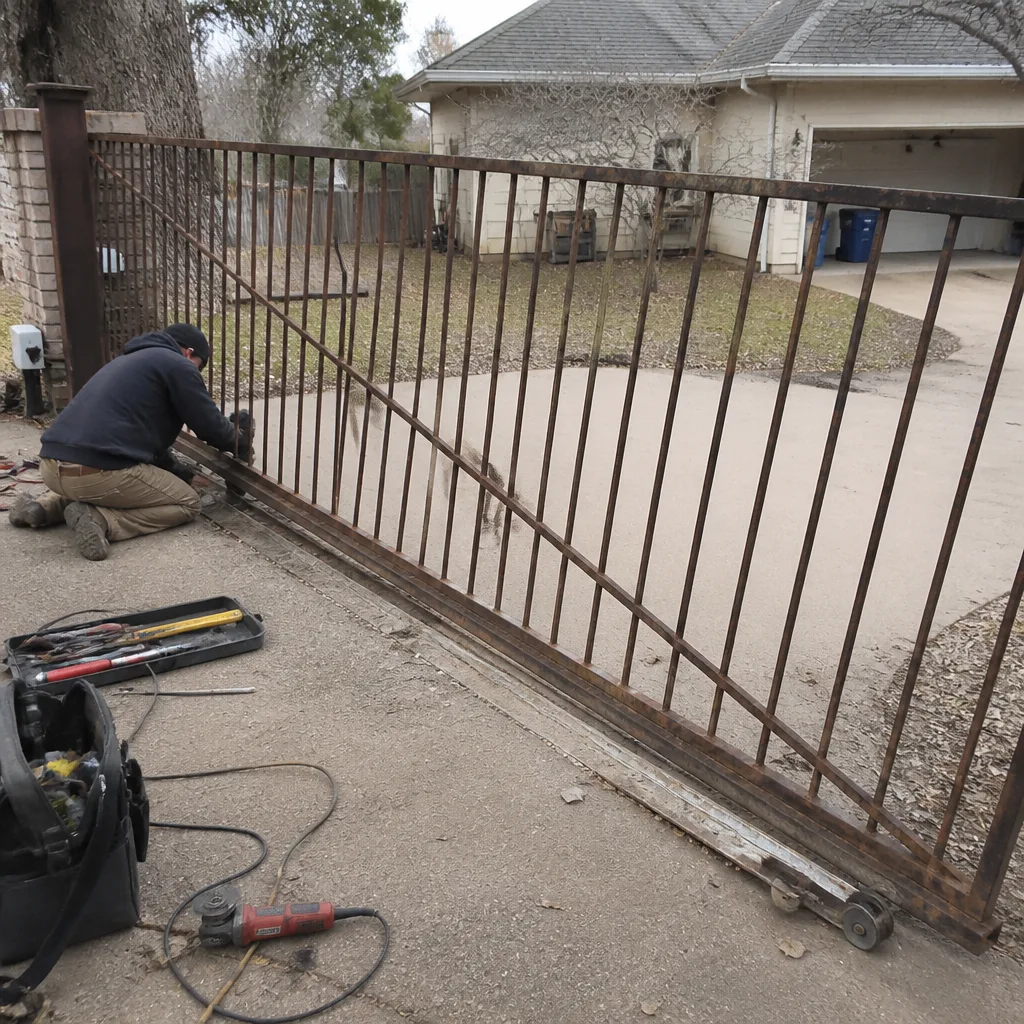 Before
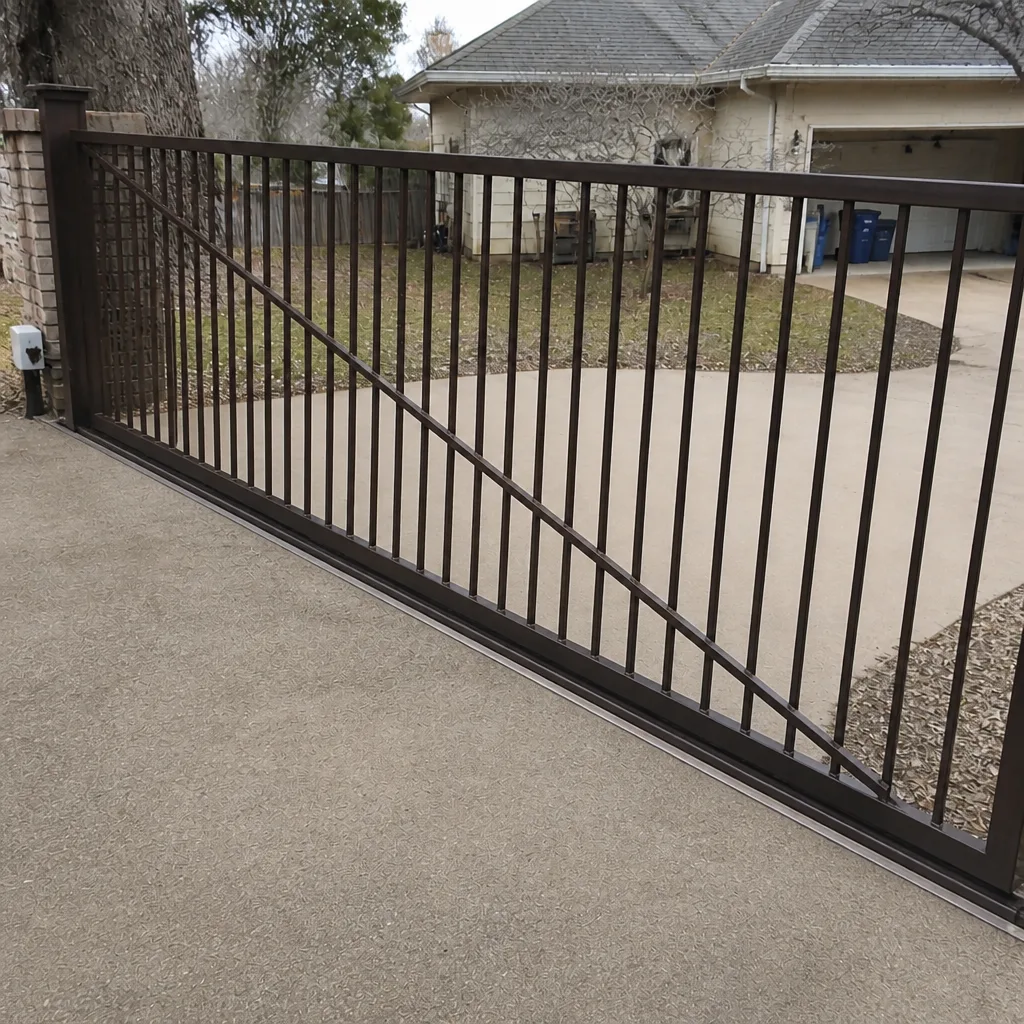 After
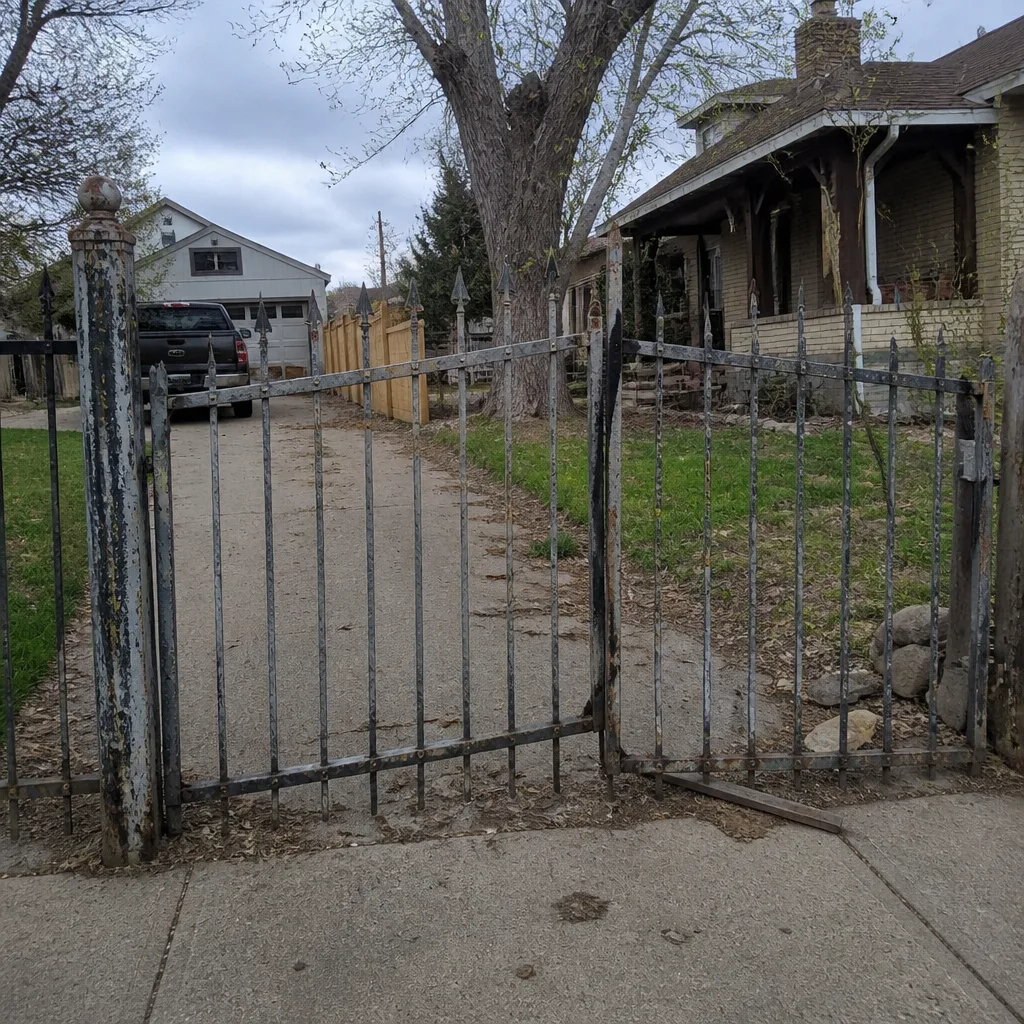 Before
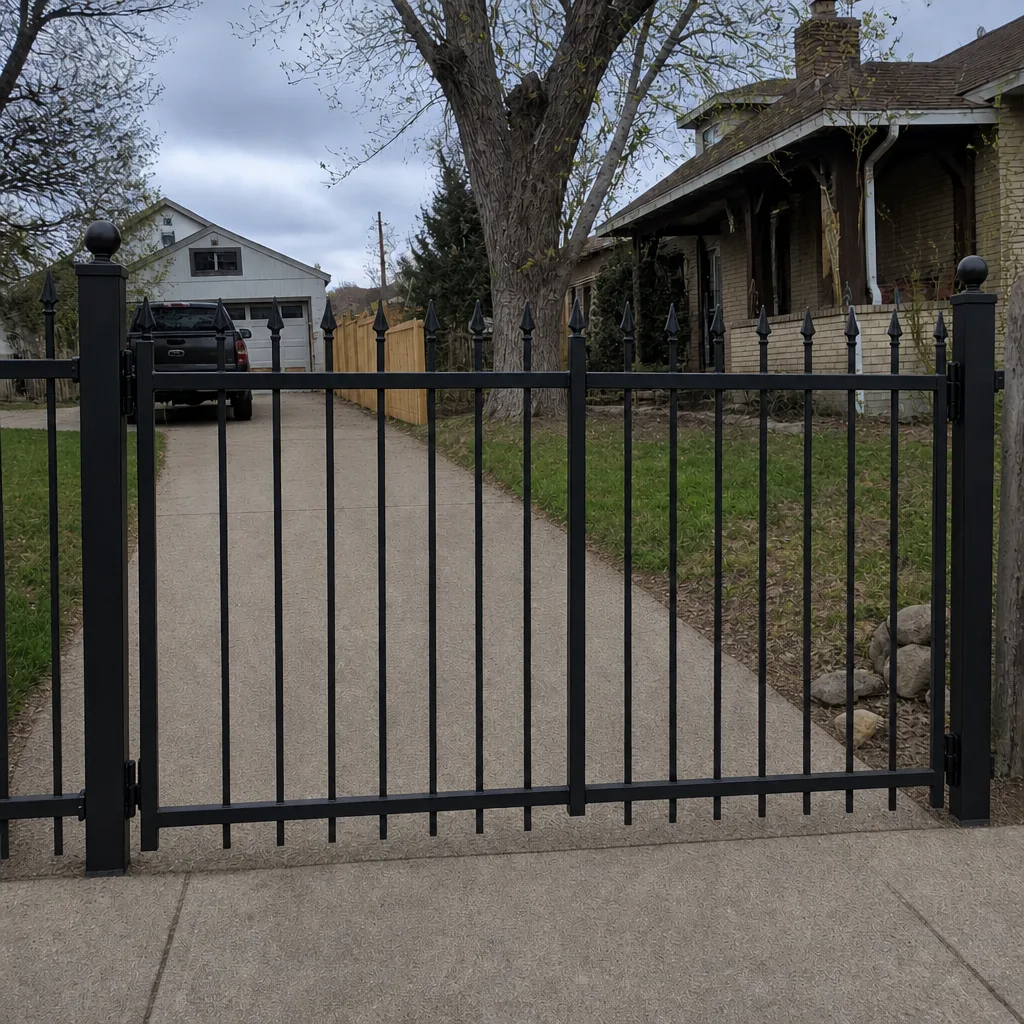 After
When to Call a Professional
Some gate problems are clear calls for a technician. If the gate reverses unexpectedly, fails to close, or stops mid-travel, the safety system or operator is involved and should be handled by a trained professional. If the operator housing needs to be opened, or a control board is suspect, that’s technician territory. If a heavy panel has come off the track, or is sagging on a hinge, don’t try to move it alone. If the gate involves any electrical connection you’d have to change or extend, it’s a licensed electrician’s job before it’s a gate job. If you’re on a brand like LiftMaster, FAAC, BFT, or Linear and want warranty coverage preserved, that’s another reason to call. Westminster Gate Repair offers free estimates in Westminster. Call (833) 348-9387. We answer 24/7, and fast dispatch runs from 7am to 7pm, Sunday through Friday.
Frequently Asked Questions
Yes, replacing a keypad is a legitimate DIY task in most cases, because it’s a like-for-like swap on an existing circuit. The work is low-risk, no permit is usually required, and the keypad is not part of the safety system that UL 325 governs. If the existing keypad shares a circuit with access control hardware or an intercom, or if you’d need to run new wire, that changes the answer and becomes a technician or electrician call.
On most automated gate manufacturers, including major brands like LiftMaster, FAAC, and BFT, adjusting or servicing the operator outside their qualified service network can void the mechanical warranty coverage. The clause is typically present in the warranty documentation even if few homeowners read it before adjusting the operator. The practical risk is real: a covered part that fails later can be declined because the service record shows unqualified work. When in doubt, have a technician do the adjustment and keep the record clean.
UL 325 is the safety standard that requires automatic gates to have entrapment protection: the gate must reverse or stop when it detects an obstruction. On an automatic gate, that protection is provided by sensors and a force setting that has to be calibrated to the specific gate. Sensor adjustment or force change without proper testing equipment creates a safety exposure, and the exposure remains on the property even after a professional later services the gate. This is why sensor work goes to a trained technician.
Permit requirements depend on the city. Most gate repairs on an existing installation don’t require a permit, but a new gate installation, a structural change to gate posts, or any change to the electrical connection usually does. Colorado is a home rule state, so the rules are set locally. Call the City of Westminster’s building department and ask before any structural or electrical change, and involve a licensed electrician for the electrical portion.
HOA rules in Highlands Ranch and similar planned communities often require contractor documentation when a gate is modified, especially if the appearance changes. If you’ve already done the repair yourself, the cleanest path is to have a qualified technician inspect the work and provide a written record. Going forward, keep the service paperwork from any gate visit; it’s usually the piece the HOA wants to see.
Yes, same-day repair is often possible, and you can call to check availability. Call (833) 348-9387. We answer 24/7, and fast dispatch runs from 7am to 7pm, Sunday through Friday. A call outside dispatch hours is booked into the next opening, Sunday through Friday, 7am to 7pm. The price for the repair is set by the written estimate after a technician sees the gate, so there’s no surprise on the invoice.
The Bottom Line
The DIY-versus-professional question for gate repair in Westminster isn’t a skill test. It’s a risk test. Cosmetic and low-risk tasks like keypad replacement, sensor cleaning, and debris clearing are legitimately yours to handle. Operator work, safety system adjustments, electrical changes, and heavy panel handling belong with a trained technician, and the reasons are warranty coverage, entrapment liability, and Colorado code rather than difficulty. When a task sits on the line, the free-est move is a call. Westminster Gate Repair has been serving Westminster since 2018, and the diagnostic before the quote is what tells you which side of the line you’re on.
Call (833) 348-9387 for a free estimate. We answer 24/7, and fast dispatch runs from 7am to 7pm, Sunday through Friday. Same-day repair is often possible. Every job is diagnosed before we quote, and the price is agreed in writing before any work starts.
Written by the team at Westminster Gate Repair, serving Westminster since 2018.